Complete Guide to Wettable Powder (WP) Pesticide Formulation Plant:
Introduction to Wettable Powder (WP) Pesticide Formulation
- Homogeneous mixing
- Controlled micron size
- Efficient dust collection
- Safe material handling
Step-by-Step Wettable Pesticide Formulation Process
Raw Material Handling
The formulation process begins with technical pesticide material, filler materials, and additives.
Typical fillers include:
- Talc
- Silica
- Other inert carriers
All raw materials are kept together and prepared according to the formulation recipe for further processing.
Pre-Blending Using Ribbon Blender
In the pre-blending stage, technical material is added to filler materials along with selected additives.
Equipment Used: U-Type Ribbon Blender
Purpose:
- Uniform mixing
- Homogeneous distribution of active ingredient
- Batch processing based on plant capacity
Pre-blending ensures consistent feed material quality before pulverization.
The Stratgem ribbon blender is engineered for high-torque applications and features a fluid coupling between the motor and gearbox, enabling smooth load handling and immediate restart after power failure.
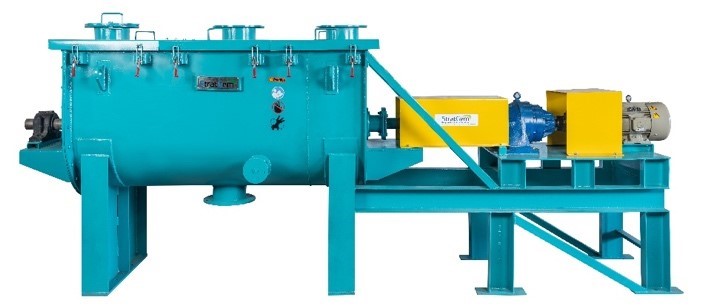
U-Type Ribbon Blender
Batch Storage
After pre-blending, the material is transferred to a batch hopper. This stage acts as a buffer and ensures a continuous and controlled feed to the pulverizing system.
Pulverizing Using Air Classifying Mill (ACM)
Key Advantages of ACM Mill:
- Grinding and classification in a single machine
- Adjustable particle size without changes in settings
- Classifier speed control for desired fineness
- Particle size range from coarse to ultra-fine (< 10 microns)
This makes ACM mills ideal for wettable powder pesticide formulation, where particle size directly affects dispersibility and performance.
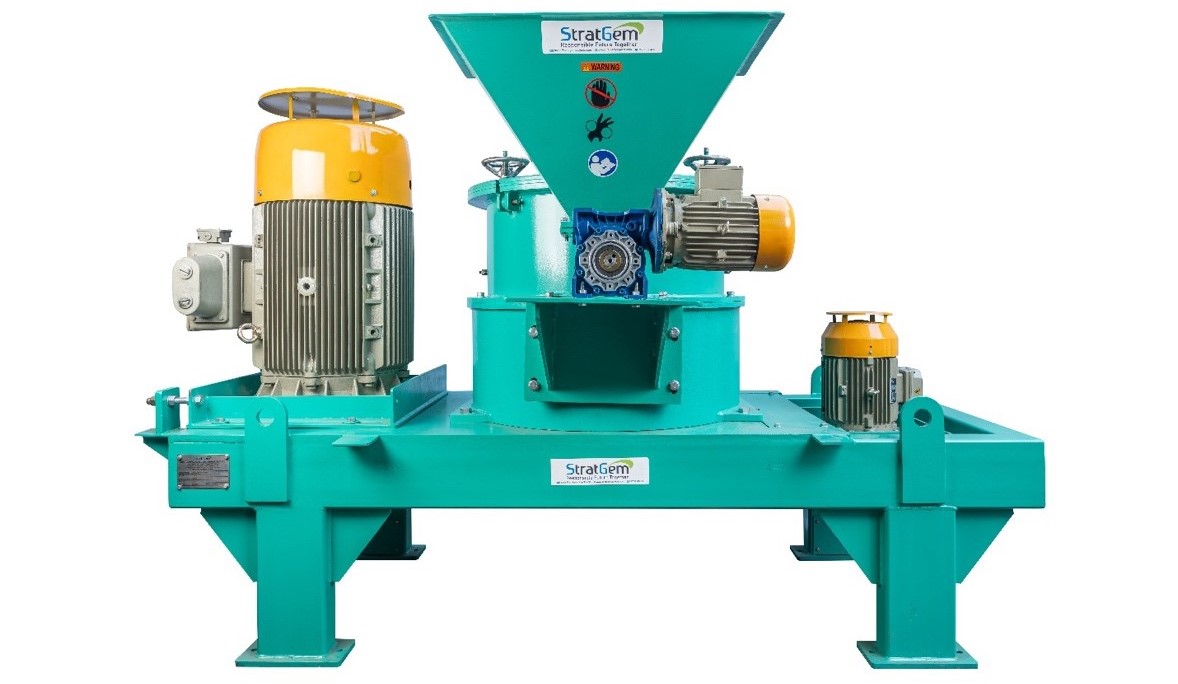
Pulverizing Using Air Classifying Mill (ACM)
Product Collection & Dust Control System
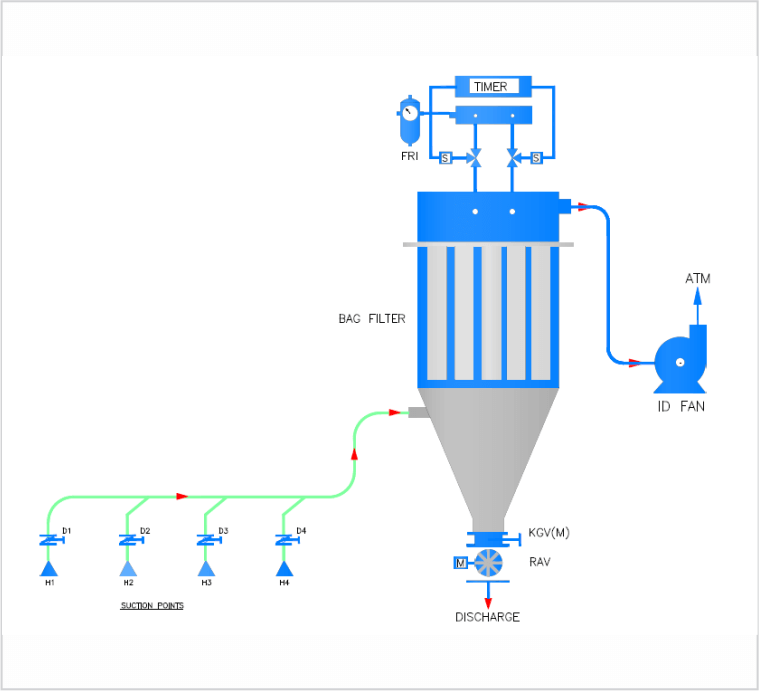
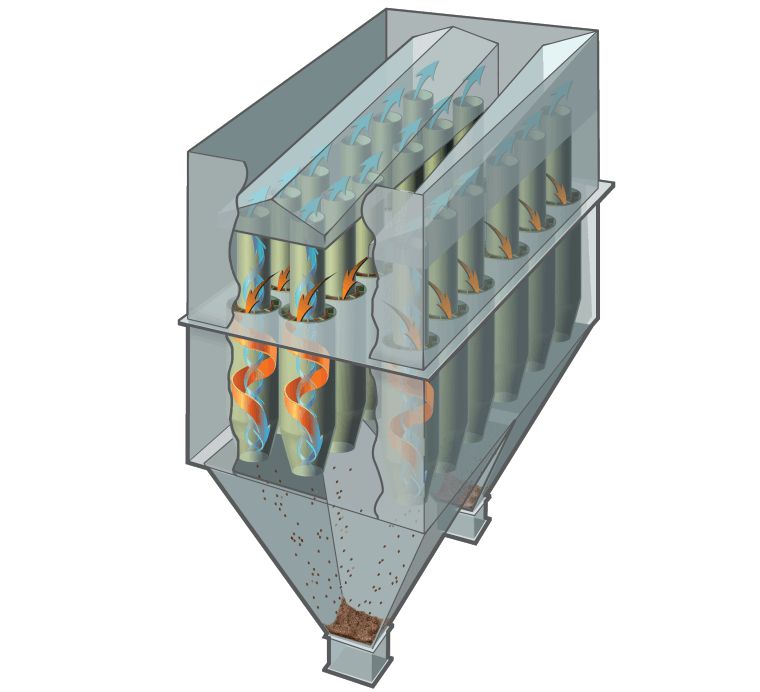
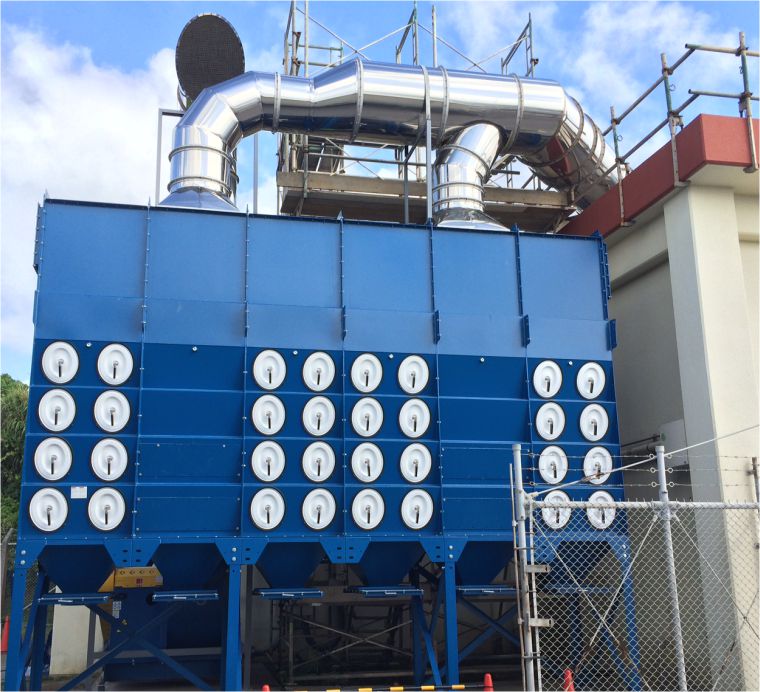
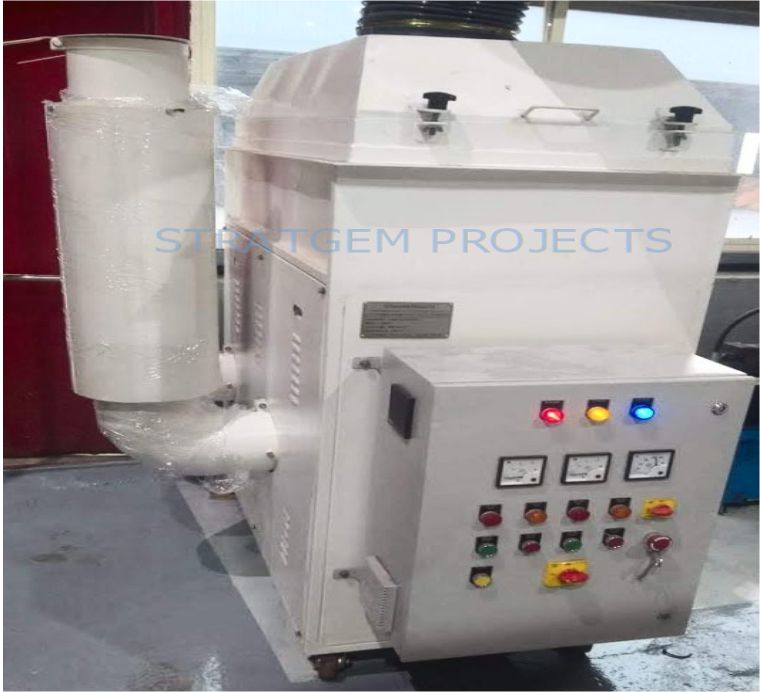
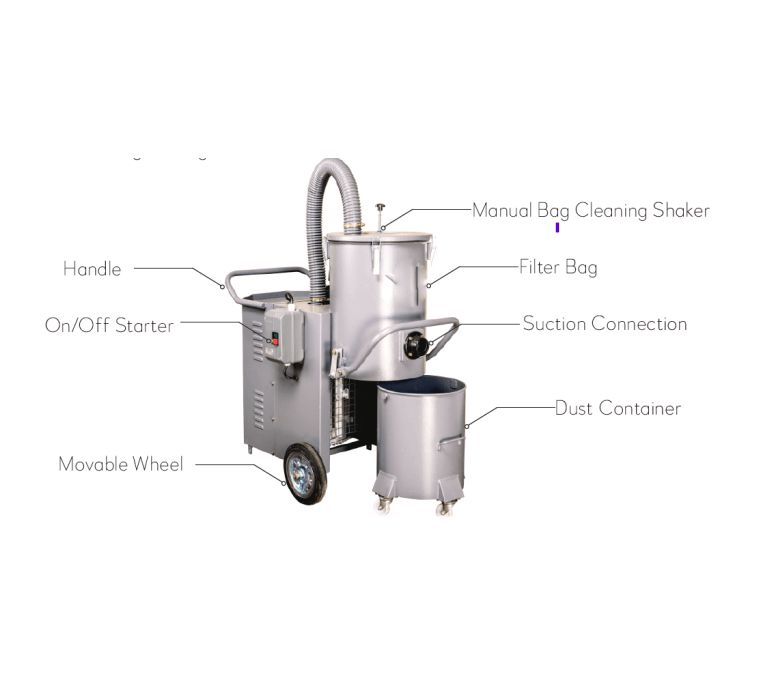
The pulverized product is collected using a dust collection and product recovery system.
Components Include:
- High-efficiency filter bags (antistatic, non-woven)
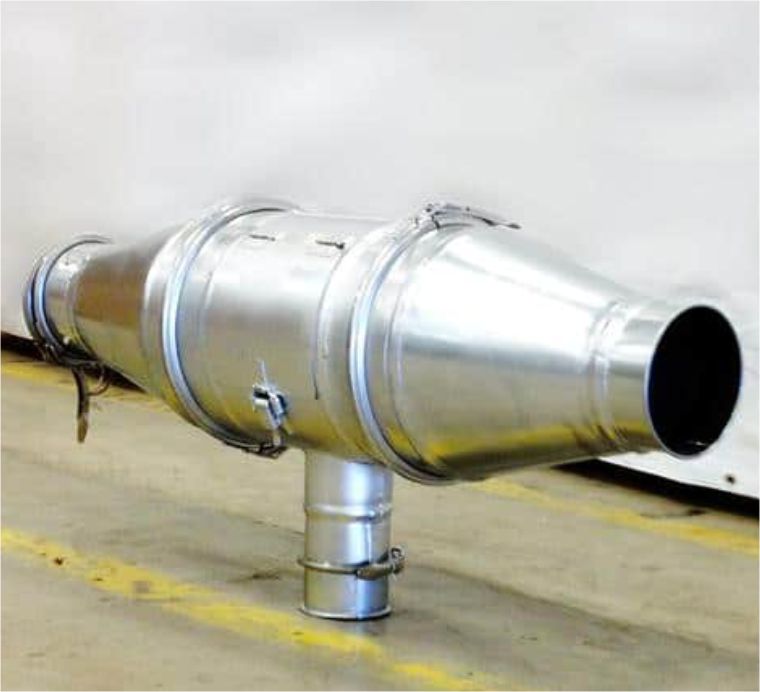
- Venturies and blow tubes
- Pulsing system consisting of Solenoid valves with sequential timer
- Rotary Air Lock Valve for discharge
- Manometer for pressure monitoring
This System Ensures:
- Dust-free operation
- Safe working environment
- High product recovery efficiency
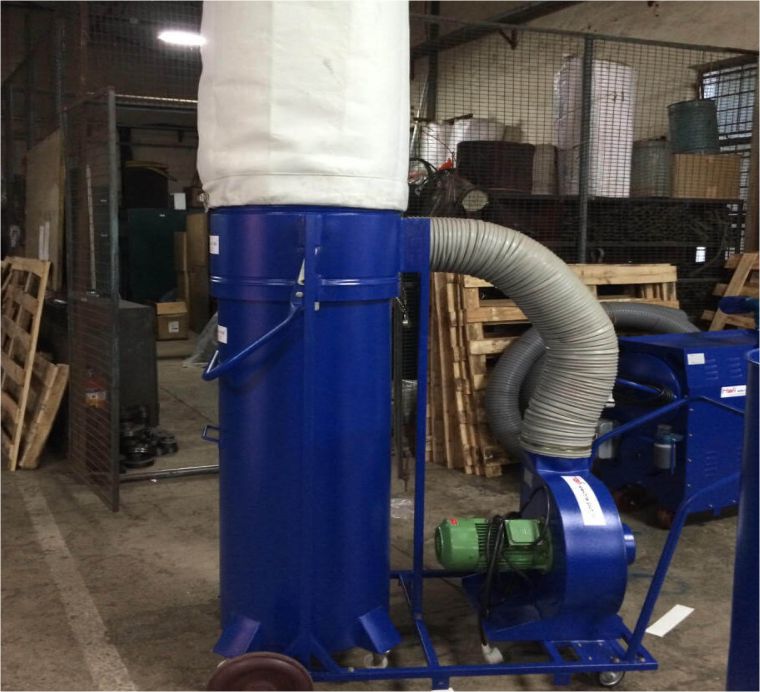
Centrifugal Fan (Induced Draft System)
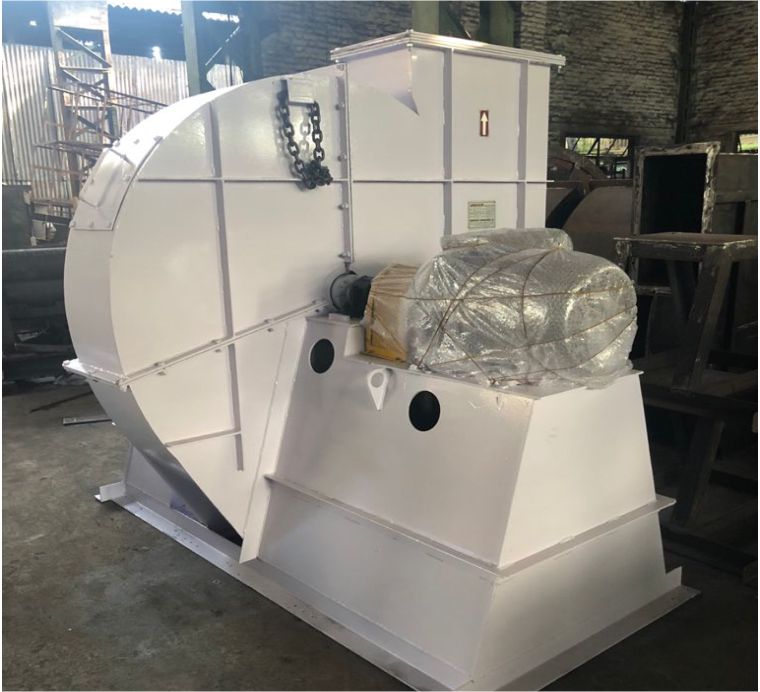
A high efficiency centrifugal fan operating under negative pressure creates suction to:
- Pull material from the ACM mill
- Transfer product into the dust collection system
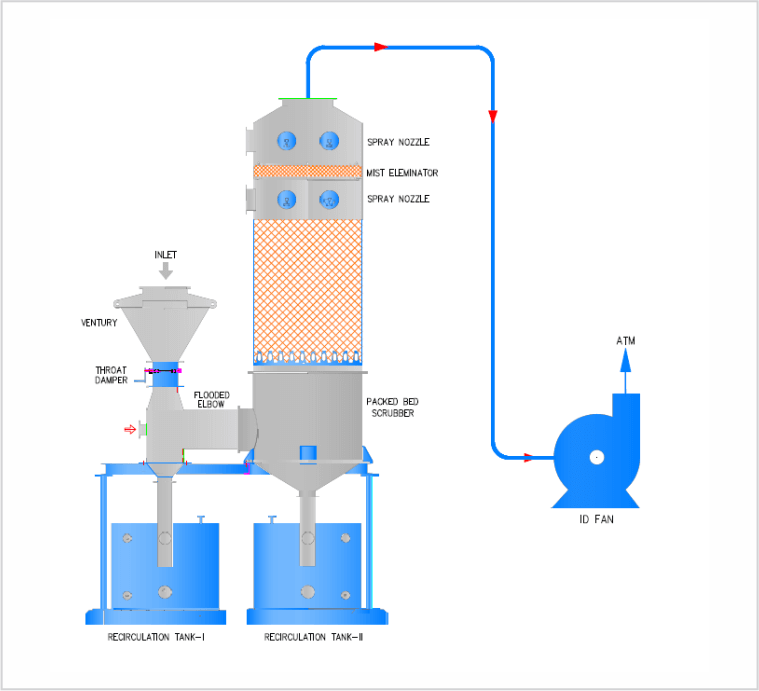
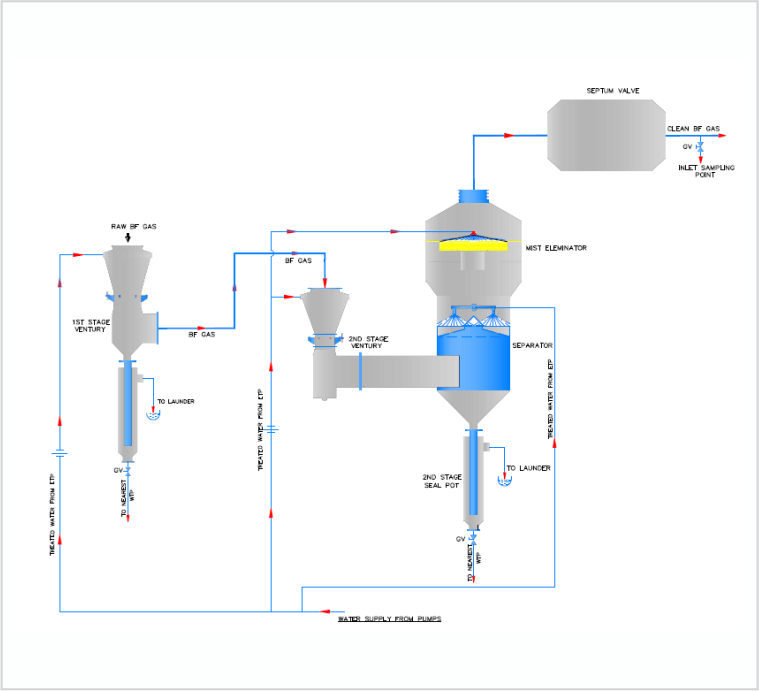
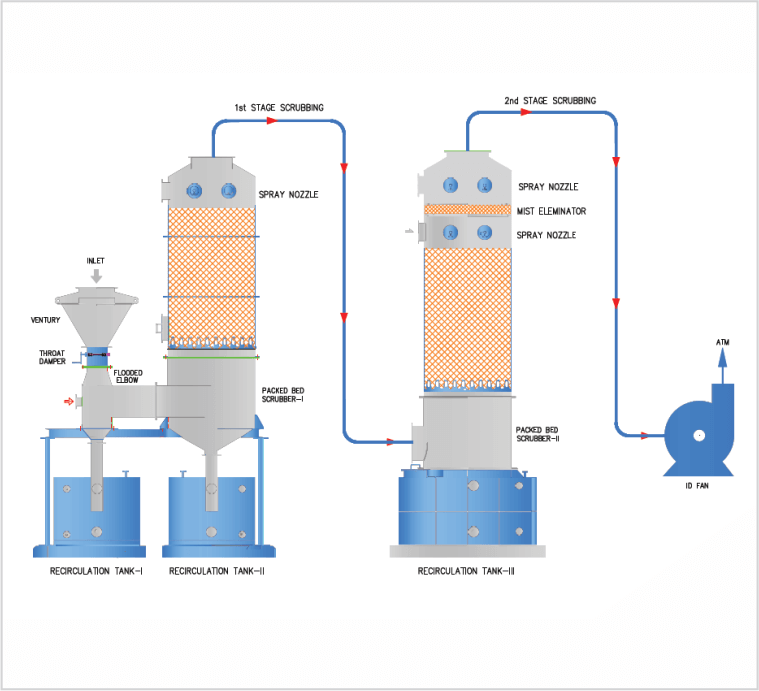
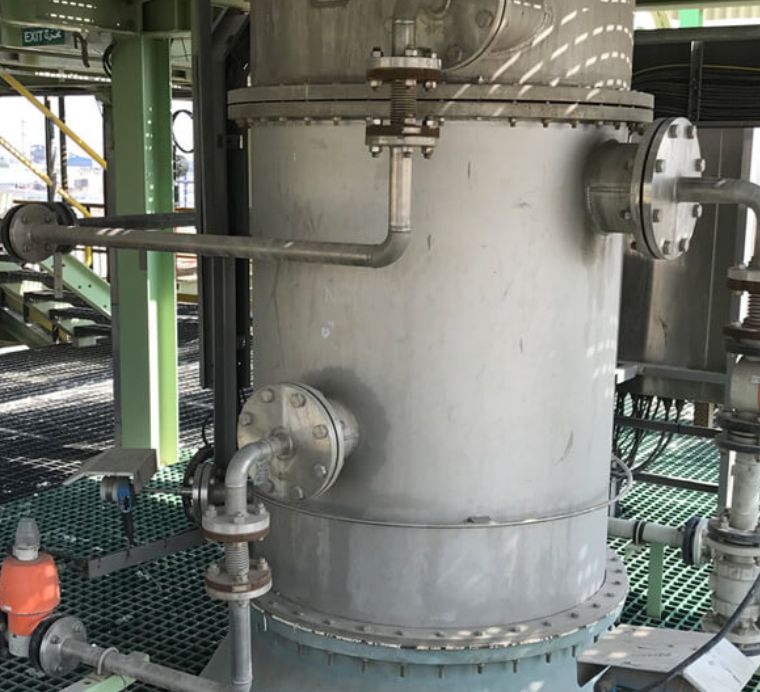
- Release filtered air (up to 99.9% efficiency) to atmosphere or wet scrubber, as the case may be
This is critical for environmental compliance and plant safety.
Post-Blending Process
Collected material is discharged continuously into the post blender through a rotary air lock valve.
In this stage:
- Final additives are added
- Uniform blending is achieved
- Product is prepared for packing
After post-blending, the wettable powder formulation is ready for packing and dispatch.
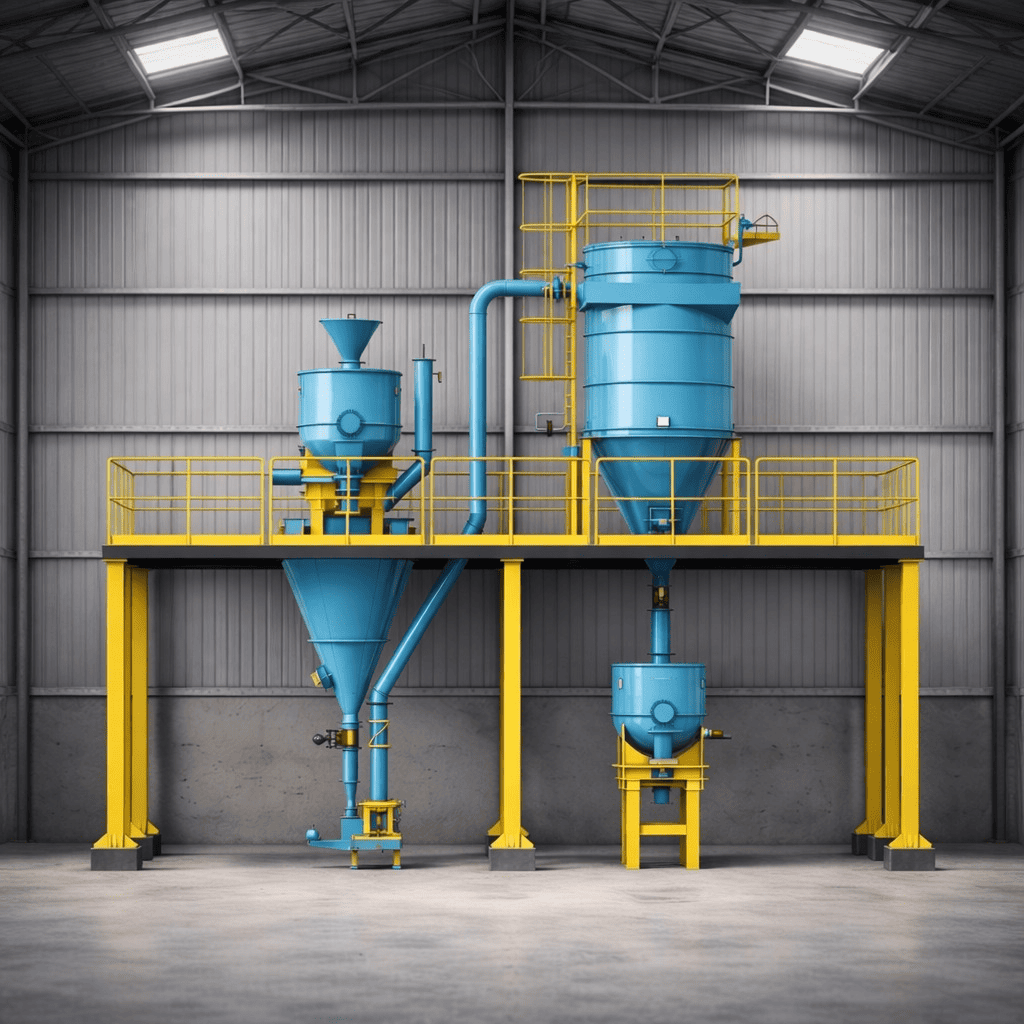
Typical Wettable Pesticide Formulation Plant Layout
- Pre-Blender
- Post-Blender
- ACM Mill
- Dust Collection System
- Centrifugal Fan
Advantages of ACM-Based Wettable Powder Formulation Plant
- Precise particle size control
- Reduced dust generation
- High product consistency
- Energy-efficient grinding
- Compliance with safety and environmental norms