PNEUMATIC CONVEYING SYSTEM
What is a Dilute Phase Pneumatic Conveying System?
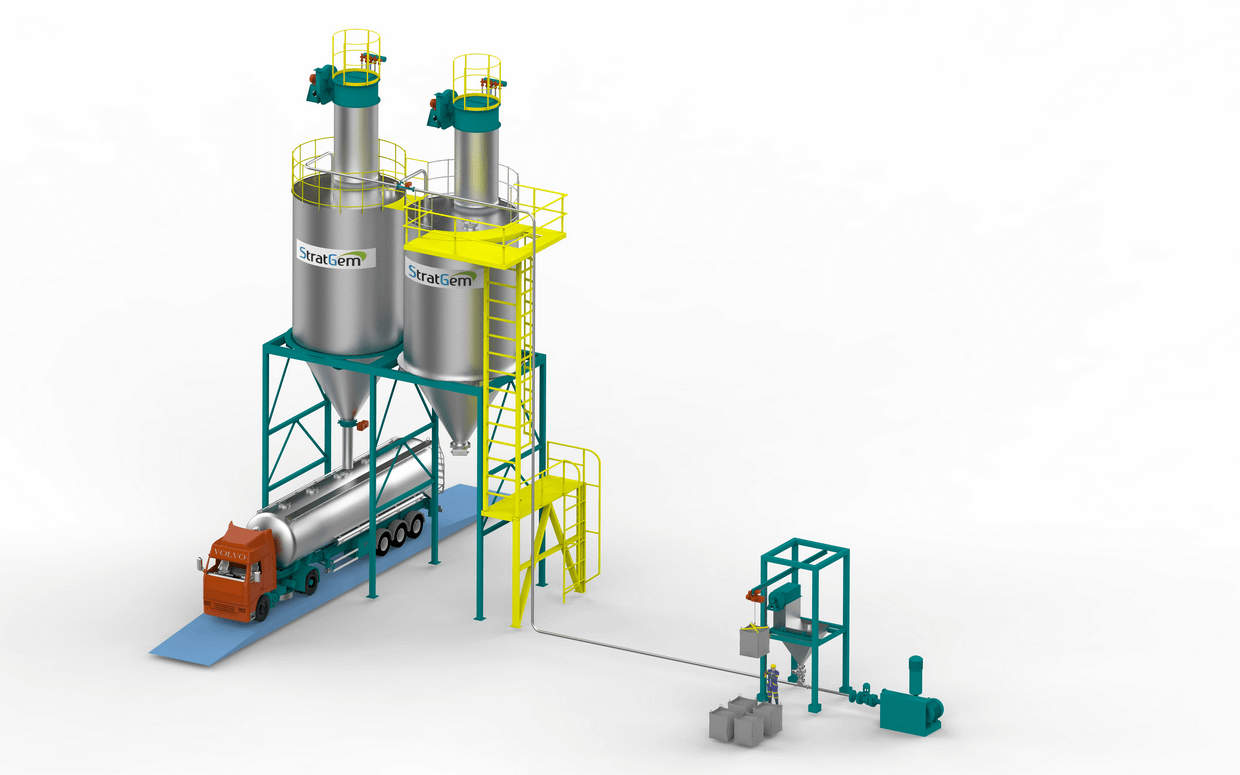
A dilute phase pneumatic conveying system is a bulk material handling method used to transport powders and granules through a closed pipeline using high-velocity air or gas. The material remains suspended in the air stream and moves continuously from one location to another using either positive pressure (pressure conveying) or negative pressure (vacuum conveying).
These systems operate at low pressure and high velocity, typically between 15–30 m/s, making them suitable for handling fine powders, light granules, and free-flowing materials across short to medium distances.
How a Pneumatic Conveying System Works?
The dilute phase conveying system works in a simple
continuous
process:
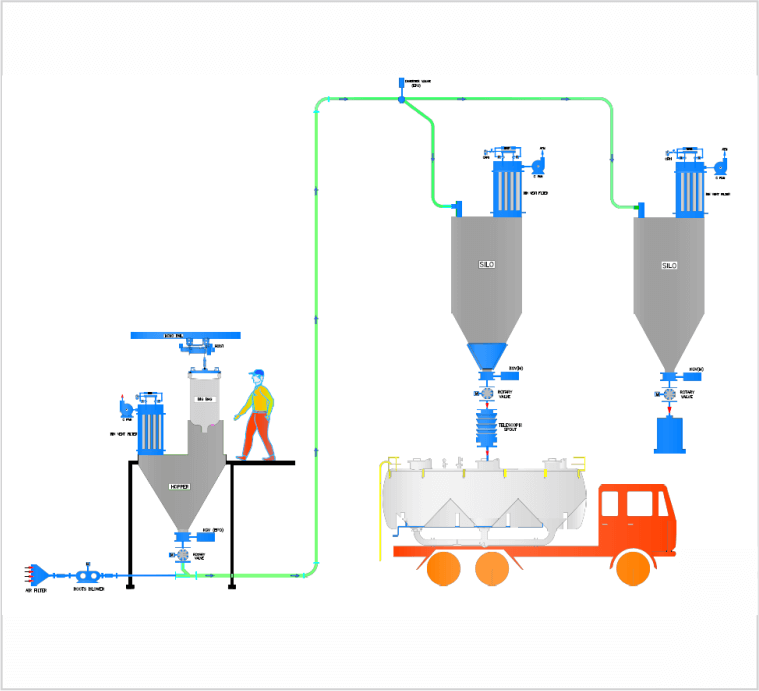
- Powder or granules are stored in a feed hopper.
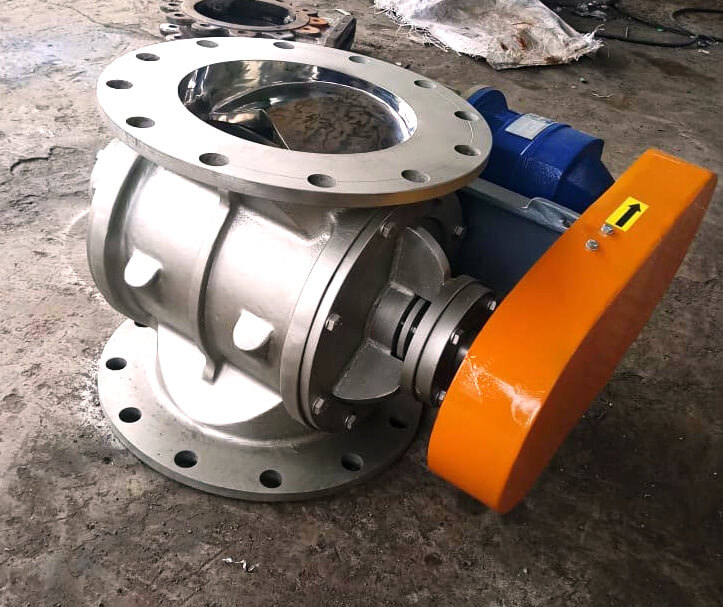
- A rotary airlock valve feeds material into the pipeline.
- A blower or vacuum pump generates airflow.
- Material is carried inside the pipeline in suspended form.
- A cyclone separator or bag filter separates air and material.
- The material is discharged into a silo, bin, or process equipment.
Because the material flows inside a closed pipeline, the system
provides dust-free, hygienic, and automated conveying.
Types of Dilute Phase Conveying Systems
1) Dilute Phase Pressure Conveying System
In pressure conveying, material is pushed
through the pipeline using positive air pressure generated by a Roots blower or
centrifugal fan.
Working Principle:
- Blower is installed before the feeding point
- Material enters pipeline via rotary airlock valve
- High-velocity air carries material to the destination
Typical Characteristics
- Velocity: above 30
- Material loading ratio: < 10
- Suitable for long conveying distance
- Suitable for higher capacities
2) Dilute Phase Vacuum Conveying System
In vacuum conveying, material is pulled
through the pipeline using negative pressure created by a vacuum pump or blower.
Working Principle:
- Vacuum source located at the receiving end
- Multiple pick-up points possible
- Material is drawn into the conveying line
Typical Characteristics
- Cleaner operation
- Ideal for food and pharma industries
- Multiple feeding locations
- Minimal dust leakage
Pressure Conveying vs Vacuum Conveying
| Sr. No | Feature | Pressure Conveying | Vacuum Conveying |
|---|---|---|---|
| 1. | Method | Pushes material | Pulls material |
| 2. | Feeding Points | Single | Multiple |
| 3. | Distance | Long | Short–Medium |
| 4. | Leakage | Moderate | Very Low |
| 5. | Industries | Cement, Ash, Minerals | Food, Pharma, Chemicals |
System Specifications
- Conveying Distance: Up to 100 meters
- Conveying Velocity: 15 – 30 m/s
- Air Pressure: Up to 10000 mmWC (Pressure) / -5000 mmWC (Vacuum)
- Material Loading Ratio: Up to 10
- Capacity: Up to 20 TPH
- Prime Movers: Roots Blower / Centrifugal Fan / Side Channel Blower / Vacuum Pump
Materials That Can Be Conveyed
Dilute phase pneumatic conveying systems are suitable for:
- 1. Cement
- 2. Fly Ash
- 3. Flour & Food Powders
- 4. Sugar
- 5. Starch
- 6. Spices
- 7. Pharmaceutical Powders
- 8. Chemicals
- 9. Plastic Granules
- 10. Minerals
Industries Using Pneumatic Conveying Systems
Our systems are widely used in:
- Cement Plants
- Food Processing Industries
- Chemical Industries
- Pharmaceutical Manufacturing
- Breweries
- Polymer & Plastic Industries
- Mineral Processing Plants
Advantages of Dilute Phase Conveying
- Dust-free material handling
- Low maintenance
- Fully enclosed conveying
- Flexible plant layout
- Reduced manpower
- Hygienic conveying
- Suitable for continuous operation
- Easy automation integration
Why Choose Stratgem Projects?
Stratgem Projects, Pune, India designs and manufactures
customized pneumatic conveying systems based on material characteristics, conveying
distance, and plant layout.
We provide:
- System design & engineering
- Material testing
- Installation & commissioning
- Start-up support
- Spare parts & servicing
- Complete bulk material handling solutions
We offer both dilute phase and dense phase pneumatic
conveying
systems for various manufacturing industries.
Stratgem Project designs and
manufactures pneumatic conveying systems based on the
needs and requirements of the customer. Food, chemicals, pharmaceuticals, plastics,
polymers, and breweries are just a few of the industries we serve.
Stratgem Pune, India can help you with either a complete
bulk
material handling system or single component equipment. Furthermore, when it comes to Dilute
phase / Lean phase pneumatic conveying systems or Dense phase conveying systems, we offer
comprehensive services such as field service, start-up service, full-scale material testing,
and spare parts. To know more about pneumatic conveying system please feel
free to connect us!
Frequently Asked Questions (FAQ)
A dilute phase pneumatic conveying system is a bulk material handling system
that transports powders and
granules through a closed pipeline using high-velocity air (typically 15–30
m/s). The material remains
suspended in the airflow and is conveyed continuously
using either positive pressure (pressure conveying) or negative pressure (vacuum
conveying).
Dilute phase conveying is preferred when handling free-flowing powders over
short to medium distances
where minor material degradation is acceptable. It is suitable for applications
requiring continuous
conveying, lower system complexity, and moderate
capacity up to approximately 20 TPH.
Dense phase conveying is recommended for fragile, abrasive, or high-value materials requiring low-velocity transport.
Dense phase conveying is recommended for fragile, abrasive, or high-value materials requiring low-velocity transport.
Dilute phase systems are suitable for cement, fly ash, flour, sugar, starch,
plastic granules,
chemicals, minerals, and pharmaceutical powders. Material suitability depends on
bulk density, particle
size distribution, moisture content, and flow characteristics.
For accurate system design, material testing is recommended.
For accurate system design, material testing is recommended.
The typical conveying velocity ranges between 15 to 30 meters per second. The
exact velocity is
determined based on particle size, bulk density, and pipeline diameter to ensure
material remains
suspended without excessive pipeline wear.
Standard dilute phase systems can convey material up to 100 meters horizontally,
depending on pressure
availability, material properties, and pipeline configuration. Longer distances
may require system
optimization or pressure adjustments.
In dilute phase conveying, the material-to-air loading ratio is typically less
than 10. This means a
larger volume of air is used relative to the material to keep particles
suspended during transport.
In pressure conveying, the blower is installed at the beginning of the system
and pushes material
through the pipeline using positive pressure. In vacuum conveying, the vacuum
pump is located at the
receiving end and pulls material through the pipeline
using negative pressure.
Vacuum systems are commonly used when multiple feed points or hygienic conveying is required.
Vacuum systems are commonly used when multiple feed points or hygienic conveying is required.
A typical dilute phase system consists of:
- Feed hopper
- Rotary airlock valve
- Roots blower or vacuum pump
- Conveying pipeline
- Cyclone separator or bag filter
- Receiving hopper or silo
Dilute phase conveying can handle mildly abrasive materials, but high conveying
velocities may increase
pipeline wear. For highly abrasive materials, special wear-resistant bends and
pipes or dense phase
conveying may be recommended.
Dilute phase systems are widely used in:
- Cement plants
- Food processing industries
- Pharmaceutical manufacturing
- Chemical processing plants
- Polymer and plastic industries
- Mineral handling plants
To know more about pneumatic conveying system please feel free to connect us!
StratGem
Powder Handling Automation Solutions


StratGem
Powder Handling Automation Products

Plan to Start a Project